
Retrieval over your documents
Answers grounded in your own content, with the source shown. Useful where staff currently ask a colleague or dig through a shared drive.
AI Engineering
Search, retrieval and automation built on your own data. Scoped to a problem you already have, with a measurable answer to whether it worked. We do not build demos.
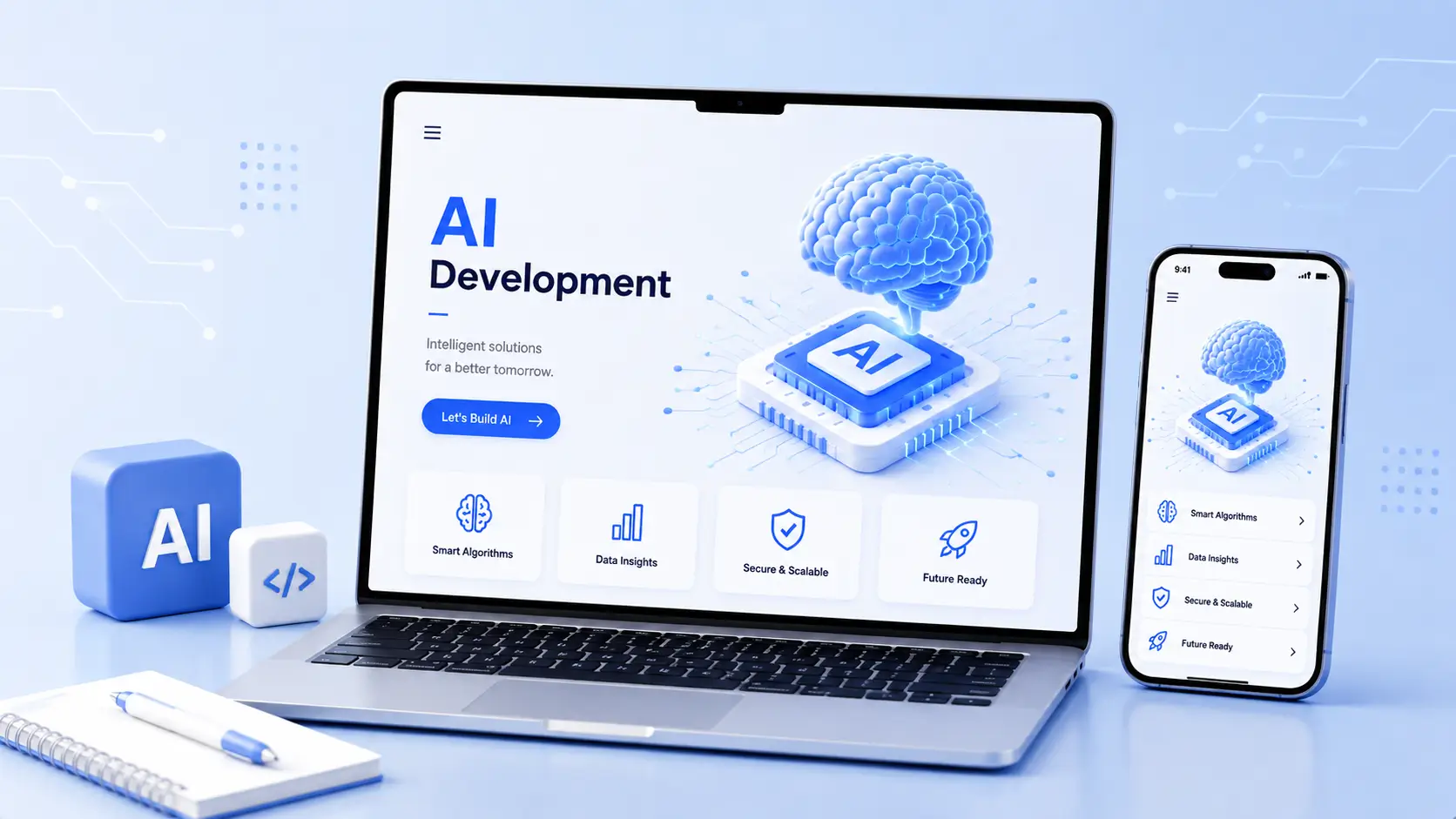
Most requests that arrive with the word AI attached turn out to be a search problem, a document problem, or a process nobody has written down. That is worth finding out in week one, because the honest version of AI development starts by checking whether a simpler system would give the same answer more cheaply and more predictably.
When it genuinely is the right tool, the work is unglamorous: getting your own data into a state worth querying, retrieval that returns the right passage, and a measurable answer to whether the thing improved. As an AI development company in Delhi we scope this against a problem you already have and a number you already track, never against a demo.
We have no published AI case study. That is a deliberate statement rather than an omission: this capability is offered on how we would approach the work, not on delivered proof, and you should weigh it accordingly.
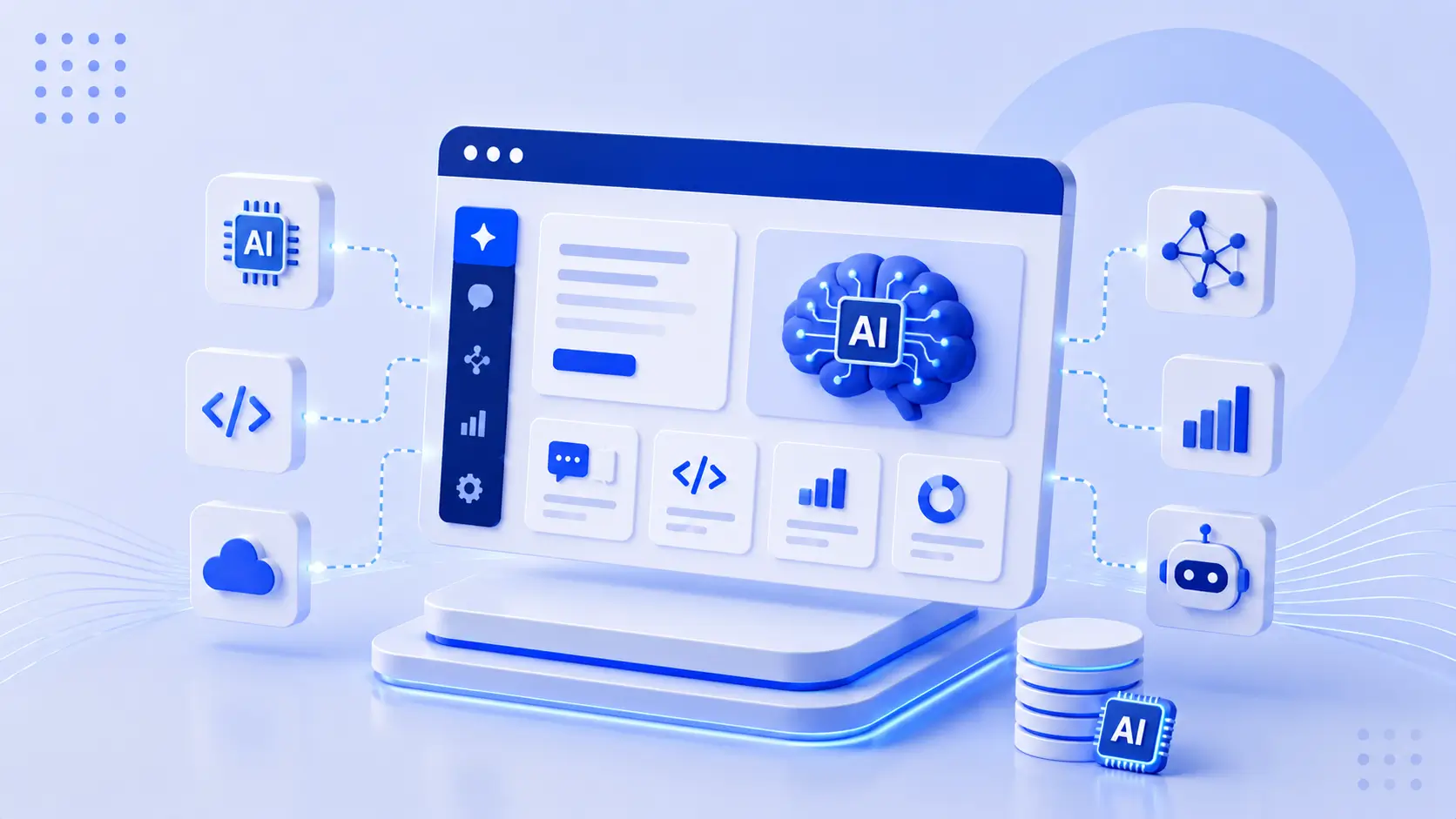
Answers grounded in your own content, with the source shown. Useful where staff currently ask a colleague or dig through a shared drive.
Assistants that handle the repetitive half of an inbox or a helpdesk queue, and hand the rest to a person cleanly.
Cleaning, chunking and indexing the content the system reads. This is most of the work, and skipping it is why most pilots fail.
OpenAI, Claude or Gemini wired into your product with sensible fallbacks, rate limits and cost controls.
Turning unstructured input into structured records. Invoices, forms and email into fields your systems can use.
Tests that measure whether answers are correct, not just whether they arrive. Without this you cannot tell a change from an improvement.
Caching, model choice and prompt size managed deliberately. Token cost is a running expense, not a one-time build cost.
Designing what happens when the system is unsure. The escalation path matters more to users than the accuracy figure does.
What is different about how this team does the work, rather than what every agency says about it.
The first question is which specific job is slow or expensive today. A project that starts with "we should use AI" has no way to know when it is finished.
Retrieval over your own content, with sources shown. A system that cannot show where an answer came from cannot be trusted with anything that matters.
A test set and a success measure are agreed at scoping. Without them, nobody can say whether the system is working or just producing output.
Some problems are not solved well by current models. We would rather tell you that early than deliver something confident and wrong.
Chosen for what the project needs, not for what is new. If you already have a stack, we work in it.
Named pieces of work inside this capability, each with a known shape and a scoped price.
On most stores a large share of searches return nothing. This is the engineering work of fixing that.
Any language model can, which is why the design matters more than the model. We build retrieval systems that answer from your documents and show the source next to the answer, so a reader can check it in one click. We also build in a clear "I do not know" path, because a system that admits uncertainty is far more useful than one that always produces something. For anything with legal or financial consequences, we design a human review step rather than removing it.
It depends on the model and the deployment, and it is one of the first things we settle. Hosted models mean data goes to the provider under their terms. Self-hosted options keep everything inside your infrastructure at higher cost. Neither is automatically right. We will lay out the options with the trade-offs, and build to whatever your compliance team approves rather than what is easiest for us.
More than most people expect, and it is a running cost rather than a one-off. Every question sent to a model is billed by size. We design for that from the start with caching, sensible model choice and controlled prompt sizes, and we give you a projected monthly figure during scoping. A system that is technically excellent and too expensive to leave running has not been delivered.
Yes, and it is a common request. Most first attempts work in a demo and disappoint in production, usually because of how the data was prepared rather than the model. We start by measuring what the current system actually gets right, which is often the first time anyone has. From there the fixes are usually specific and much smaller than a rebuild.
Describe the job that is slow or expensive today. If we do not think this technology solves it, we will say so.
Vikalp Development
We usually reply within one business day