
Staged system replacement
Built alongside production with a way back at every step, because a cutover requiring downtime rarely gets signed off.
Industry
Software that sits alongside machinery and an ERP that was already working.
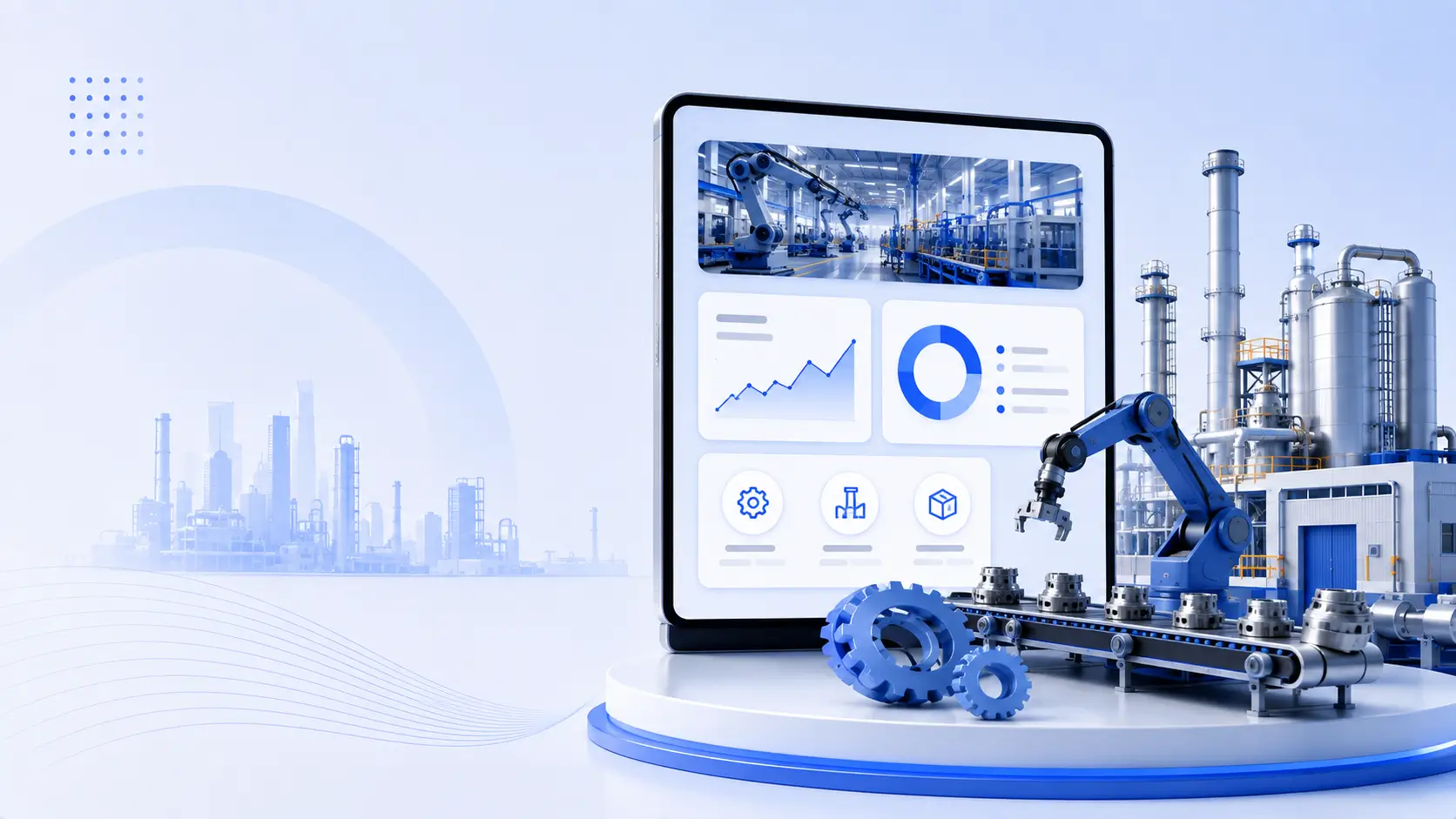
Software on a factory floor arrives late. The machinery was there first, the ERP was there first, and the processes were working before anyone proposed a system. New software has to fit around all three, and the people using it are not at a desk.
That changes what good looks like. Manufacturing software development is judged on whether it survives gloved hands, poor light, an intermittent network in a steel building, and a shift that does not pause because a page is loading.
The integration is usually the real project. Getting data out of an ERP that was configured a decade ago, on a schedule that does not disturb it, and reconciling it with what the floor actually reports. We have no published manufacturing case study; this page describes the approach.
Sector constraints
Replacement happens alongside production, in stages, with a way back at every step. A cutover needing downtime is one that never gets approved.
Gloves, glare, noise and shared terminals change what an interface can ask for. Screens designed at a desk fail here.
Spreadsheets, fixed-width exports and machine logs are the real inputs. Ingesting them reliably is most of the integration work.
Batch and process history has to be produced on request, not reconstructed from memory when someone asks.
Built alongside production with a way back at every step, because a cutover requiring downtime rarely gets signed off.
Ingesting the formats that actually exist, reliably enough that people stop keeping a parallel spreadsheet.
Screens designed for the floor rather than the desk. Readable with gloves on, under glare, on a shared terminal.
Batch, part and process history captured so it can be produced on request rather than reconstructed.
That is the only way we would propose doing it. Functions move across one at a time, both systems run in parallel, and each step is reversible until it has proven itself. It takes longer than a single cutover and it is the reason these projects finish, because a plan that requires the line to stop is a plan that keeps getting postponed.
No, and it is normal. Spreadsheets and fixed-width exports are treated as real inputs with validation around them, rather than as something to be cleaned up before the project can start. A migration that begins by asking a factory to reorganise its data is a migration that does not begin.
That depends almost entirely on interface decisions rather than features. Floor screens are designed against the real conditions, gloves and glare and shared logins included, and reviewed with the people who will use them before they are built. Software the floor works around is worse than no software, because now there are two versions of the truth.
Tell us the constraints you are already aware of. Half of scoping a sector project is working out which of them are real and which are assumed.
Vikalp Development
We usually reply within one business day