
Shopify storefronts
Theme and app development on Shopify and Shopify Plus, including custom Liquid and Storefront API work. Four published case studies are built this way.
Industry
Retail software is rarely broken by the storefront - it breaks at checkout under load.
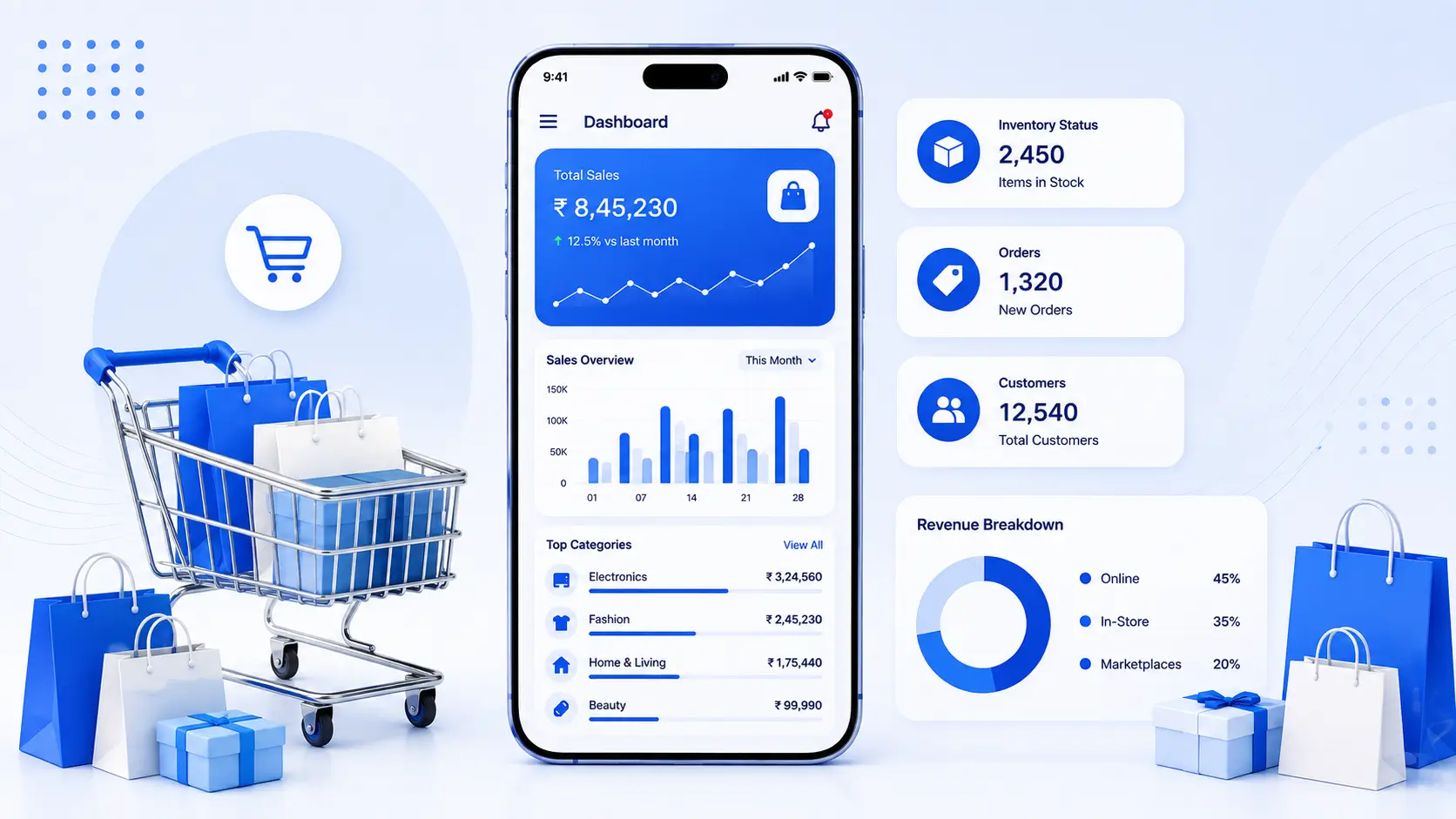
Retail is the sector we have delivered in most, and the lesson from four published commerce builds is consistent. The storefront is almost never what fails. The catalogue behind it is.
Thousands of variants entered by different people over several years, attributes that mean three different things, and a stock number that disagrees between the site and the warehouse. Retail software development that starts with the theme and leaves the catalogue for later ends up rebuilding the theme.
The other thing that separates retail from everything else is that your worst day is your most important one. A checkout that works comfortably in November and buckles during a sale has failed at the only moment that counted. Load is planned for the peak here, not the average.
Sector constraints
A store that is comfortable for eleven months can lose a year of margin in one afternoon. Capacity is planned around the real pattern, not an average.
Variants, bundles and pricing rules are where commerce gets complicated. Getting that model wrong is what makes a replatform expensive two years later.
Every extra step, field or redirect costs sales. Changes go out one at a time, with a reason we can point at.
Storefront, warehouse and accounts believing three different numbers is the most common operational failure we are called in to fix.
Theme and app development on Shopify and Shopify Plus, including custom Liquid and Storefront API work. Four published case studies are built this way.
A React front end over a commerce backend, for when the storefront needs something a theme will not allow.
The store connected to ERP, accounts, logistics and CRM, so stock and orders stay consistent across all of them.
Diagnosing where a storefront is slow or losing customers, and fixing that specifically rather than proposing a redesign.
A Shopify storefront for Luxury Watch Outlet's catalogue of discounted Swiss watches, with store locations in Delhi and Mumbai.
A WordPress and WooCommerce site cataloguing GNM Arts' curtain and upholstery fabric collections.
An OpenCart storefront for Bomberg India's watch collections with an integrated product catalogue.
Shopify is the right answer more often than agencies admit. It handles payments, hosting, security and compliance for you, and that is budget you can spend on the parts that make you money. Building custom is worth it when your catalogue or checkout needs something the platform will not permit. We will tell you which case you are in before you commit, even though the custom build would be the larger project for us.
Yes, and it is the part we plan first. Every old URL is mapped to its new equivalent before launch, and the mapping is kept in version control so it can be checked. Skipping this is the single most common cause of traffic loss after a replatform, and the damage takes months to undo once it has happened.
The support arrangement is agreed before the peak, not during it. That means naming who is on call, how you reach them, and what counts as an emergency. We also run a check in the days before a major sale, so problems surface while there is still time to fix them calmly.
Tell us the constraints you are already aware of. Half of scoping a sector project is working out which of them are real and which are assumed.
Vikalp Development
We usually reply within one business day