Messaging platforms
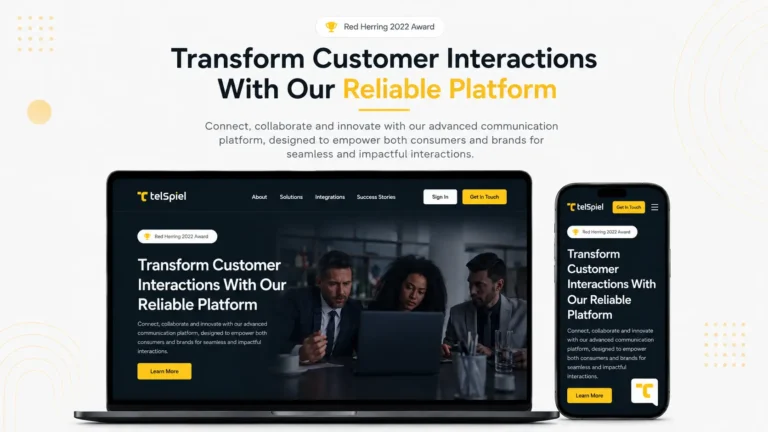
Systems built around delivery and volume. Our published work includes a platform for an enterprise communications business.
Industry
Communications products are built around delivery and volume, not the interface.
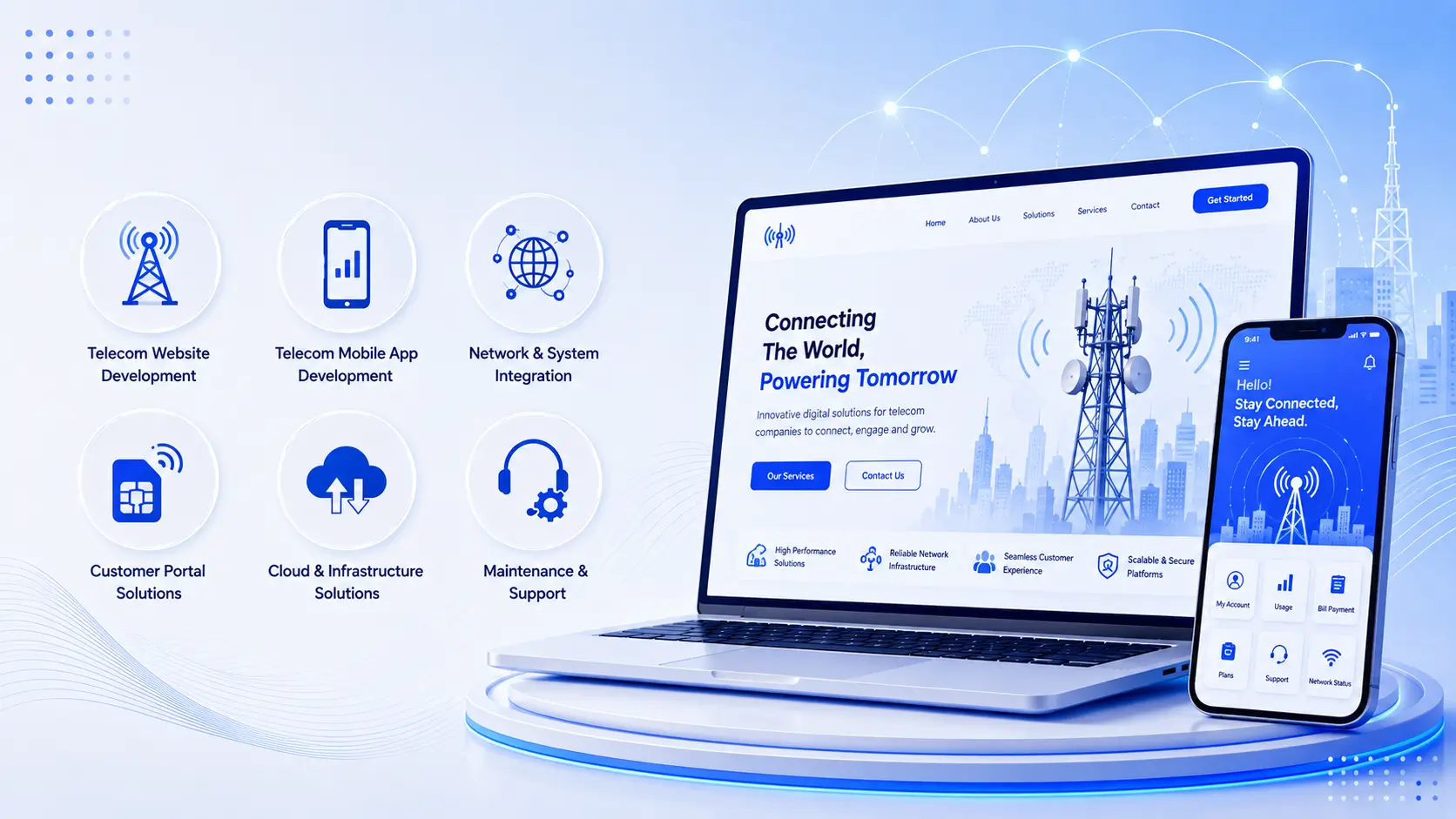
Telecom platforms are integration problems wearing a product interface. The value is rarely in what you build and almost always in what you connect: provisioning, billing, number management, and systems that were designed decades apart and were never meant to talk to each other.
Our platform work for Telspiel, an enterprise communications business, is a published case study. Telecom software development in practice means designing for partial failure, because one of those upstream systems will be slow or unavailable and the customer must not see a broken screen because of it.
The second constraint is volume of a particular shape. Not many users doing a lot, but an enormous number of small events that all have to be recorded accurately, because they are what the invoice is built from.

Sector constraints
Whether a message arrives, and whether you can prove it did, matters more than anything built around it. Reporting has to be as reliable as sending.
Systems that work at hundreds of messages behave differently at millions. Queueing, retries and back-pressure are architecture, not later additions.
Consent, opt-out and record-keeping rules apply per market. They belong in the data model rather than in an operations checklist.
Gateways fail individually and without warning. Failover between them is a normal requirement here, not a premium feature.
Systems built around delivery and volume. Our published work includes a platform for an enterprise communications business.
Proving a message arrived, at scale, with reporting as dependable as the sending itself.
Queues, retries and back-pressure designed in from the start, because they cannot be added convincingly later.
Opt-in, opt-out and record-keeping held in the data model, alongside the message rather than in a separate list.
Engineering a High-Performance Digital Hub for Enterprise Communication
That is the design question, and it is answered with numbers before the build rather than discovered after it. Throughput, queue behaviour and failure modes are decided at scoping, because none of them can be retrofitted convincingly. If your projected volume needs a different architecture than your current one, we will say so at the start.
Generally yes, and multiple gateways with failover between them is a normal requirement rather than an unusual one. Providers go down individually, and a system with a single route out will eventually stop for reasons nobody controls. We design for that as the default rather than as an upgrade.
In the data model, per market, with the record kept alongside the message it applies to. Consent tracked in a separate spreadsheet is consent nobody can produce when it is actually asked for. Which rules apply is your compliance team's call. Making them enforceable in the system is ours.
Tell us the constraints you are already aware of. Half of scoping a sector project is working out which of them are real and which are assumed.
Vikalp Development
We usually reply within one business day