
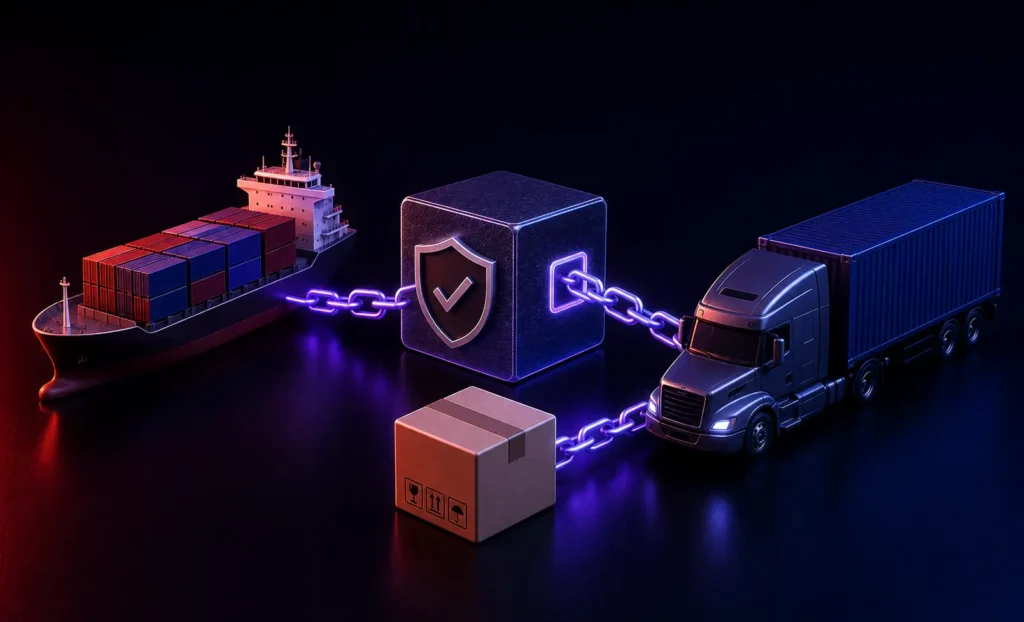
Blockchain in enterprise logistics has a credibility problem, mostly earned - a lot of “blockchain for supply chain” pilots from a few years ago were solutions looking for a problem, chasing the technology’s novelty rather than a genuine gap a normal database couldn’t fill. That history makes it worth being precise about where blockchain actually adds something a well-built traditional system doesn’t, because that set of use cases is real, just narrower than the pitch decks suggested.
What blockchain actually solves that a normal database doesn’t
The specific property blockchain provides that a traditional database genuinely can’t: a shared, tamper-evident record that multiple parties who don’t fully trust each other can all verify independently, without needing to trust a single central authority’s database. In a logistics context with multiple independent parties - a manufacturer, several logistics providers, customs authorities, a retailer - each maintaining their own systems and not fully trusting any other party’s centrally-controlled database, a shared ledger that all parties can verify is solving a genuine trust and coordination problem, not just a data-storage one.
Where this actually earns its complexity in logistics
- Multi-party provenance tracking - verifying a product’s origin and chain of custody across multiple independent, mutually-distrustful parties (particularly relevant for pharmaceuticals, luxury goods, or food safety compliance) where a single party’s database claiming “this is authentic” isn’t sufficient verification for the other parties involved.
- Smart contracts for automated, multi-party settlement - payment or handoff conditions that automatically execute once verifiable conditions are met (proof of delivery, customs clearance), reducing manual reconciliation between parties who don’t share a trusted intermediary system.
- Regulatory audit trails across organizational boundaries, where an immutable, independently verifiable record is a genuine compliance requirement, not just a nice-to-have.
Where a normal database is the right call, honestly
If all the parties involved genuinely trust a single system of record - an internal supply chain across your own company’s divisions, for instance - a traditional database with proper access controls and audit logging accomplishes the same practical goal with dramatically less complexity, cost, and operational overhead. Blockchain’s core value proposition is decentralized trust among mutually-distrustful parties; if that specific condition doesn’t exist in your actual use case, you’re paying blockchain’s real complexity cost for a benefit you don’t need.
What we actually tell clients considering this
Before recommending blockchain, we ask a specific, disqualifying question: do the parties involved genuinely not trust a single central database, and would a shared, verifiable ledger solve a real coordination problem between them? If the honest answer is that all parties already trust one system (yours), or if the actual pain point is data quality and integration rather than trust between parties, blockchain adds cost and complexity without solving the real problem - a well-architected traditional system with proper APIs for multi-party data sharing is the better, cheaper answer.
The realistic path if blockchain genuinely fits
Start with a narrow, well-defined use case involving the specific parties and specific data where the trust problem is real - not a company-wide blockchain initiative - prove the coordination benefit concretely, then expand deliberately. This mirrors the same phased, prove-it-first approach we recommend for any genuinely new architecture, and it’s particularly important here given how much blockchain hype has produced abandoned pilots that never validated the actual value proposition before scaling.
We evaluate this honestly as part of our backend architecture consulting - including recommending against it when a traditional system is genuinely the better fit. Talk to us if you’re evaluating blockchain for a multi-party logistics or supply chain problem.