
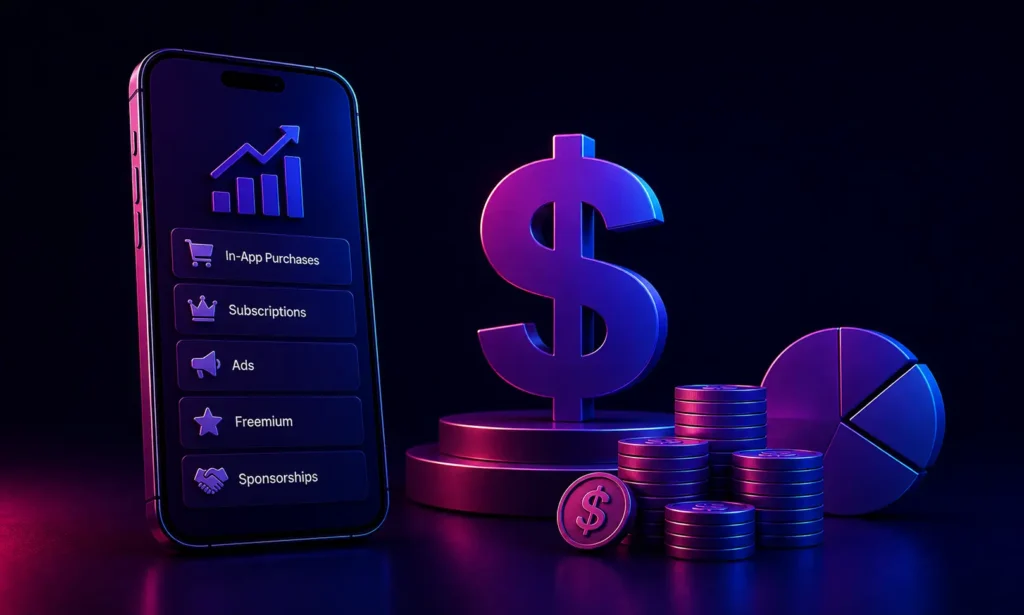
How to Monetize Your Mobile App: A Strategy Guide for 2026
What is the best way to monetize a mobile app?
The best way to monetize a mobile app depends entirely on your user base. Utility and content apps perform best with recurring Subscription models. High-engagement games excel with In-App Purchases (IAP) and rewarded video ads. For B2B enterprise apps, a Freemium model with gated advanced features is typically the most profitable app monetization strategy.
For Startup Founders, building a beautiful, highly functional mobile app is only half the battle. The true challenge lies in generating revenue without alienating the user base.
In 2026, the app store landscape is brutally competitive. Consumers are incredibly resistant to paying an upfront cost merely to download an app (the “Premium” model). Instead, the market has universally shifted toward free-to-download applications that monetize user attention or gated value.
If you want your startup to survive, you must architect your business logic around proven app monetization strategies long before the first line of code is written. Here is a definitive guide on how to monetize your mobile app effectively in the modern digital economy.
1. The Subscription Model (Recurring Revenue)
The subscription model is the holy grail of software monetization. Users pay a recurring fee (weekly, monthly, or annually) to access the app’s content or services.
Why it works in 2026:
Investors value recurring revenue above all else because it provides predictable cash flow. This model is exceptionally effective for apps that provide continuous, updating value-such as fitness coaching apps, premium dating platforms, or specialized Financial Services tools.
The Strategy:
To succeed with subscriptions, your Mobile App Development team must engineer a robust onboarding flow that clearly demonstrates the app’s value. Offer a risk-free 7-day trial. Use behavioral analytics to identify the exact moment a user experiences the “Aha!” moment, and trigger the subscription paywall immediately following that success.
2. The Freemium Model (Gated Features)
The Freemium model allows users to download the app and use its basic core functions entirely for free, forever. However, “power user” features are locked behind a one-time purchase or a subscription upgrade.
Why it works in 2026:
Freemium is the ultimate user acquisition tool. It eliminates the friction of downloading the app. Because the basic features are free, users can integrate the app into their daily lives, acting as an organic mobile app retention strategy.
The Strategy:
The hardest part of Freemium is finding the balance. If the free version is too restrictive, users will delete it in frustration. If the free version is too generous, no one will ever upgrade. For B2B SaaS applications, a common Freemium strategy is gating the export functionality. Let the user create the beautiful graphic design for free, but charge them to export it as a high-resolution PDF.
3. In-App Purchases (IAP) and Virtual Economies
In-App Purchases involve selling digital goods, services, or virtual currency directly within the app. This is the dominant monetization strategy for the mobile gaming industry but is rapidly expanding into other sectors.
Why it works in 2026:
IAPs capitalize on micro-transactions. A user might balk at a $10/month subscription but will happily spend $1.99 repeatedly to unlock new digital avatars, extra storage space, or premium UI themes.
The Strategy:
If you are building a platform with Web 3.0 Integration, IAPs can be transformed into decentralized tokenomics. Instead of buying a standard digital asset, users purchase NFTs or utility tokens that they truly own and can trade within the app’s platform, creating a highly lucrative virtual economy.
4. In-App Advertising (When Done Right)
In-app advertising is the oldest monetization strategy, but in 2026, dropping intrusive banner ads across the bottom of the screen is a surefire way to ruin your user experience.
The Strategy:
If you must use ads, use Rewarded Video Ads. In this model, the user chooses to watch a 30-second video advertisement in exchange for a tangible benefit within the app (e.g., an extra life in a game, or 24 hours of premium access in a utility app). Users love this because they feel they are in control of the transaction, and advertisers pay top dollar for rewarded ads because completion rates are nearly 100%.
5. E-Commerce and Physical Purchases
If your app serves a physical business, the app itself doesn’t need to generate revenue via digital sales; it acts as a streamlined sales channel for physical goods or services.
By integrating a custom E-Commerce Platform directly into the app, you bypass Apple and Google’s 30% digital transaction fees. Whether you are selling physical apparel or booking in-person plumbing consultations, the app monetizes by reducing friction in the traditional sales funnel via technologies like one-click biometric checkout.
Conclusion
Choosing the right app monetization strategy requires a deep understanding of your target audience and the core utility of your product. You do not have to choose just one; the most successful startups often employ a hybrid approach (e.g., a Freemium app that also utilizes Rewarded Ads for free users). The key is to ensure that the monetization method enhances, rather than disrupts, the user experience.
Need help building a profitable mobile platform?
At VDPL, we do more than just write code; we help founders architect sustainable digital businesses. Contact us today to discuss your mobile app strategy and development roadmap.
Frequently Asked Questions (People Also Ask)
Can I make money with a free app?
Yes, the vast majority of app revenue globally is generated by apps that are entirely free to download. They monetize by offering in-app purchases (IAP), implementing a Freemium model (charging for premium features), or displaying targeted, rewarded advertisements.
What is the most profitable app monetization strategy?
For utility, content, and productivity apps, the Subscription model is widely considered the most profitable because it generates compounding, recurring monthly revenue. For mobile games, In-App Purchases (selling digital goods or currency) remain the most lucrative strategy.
How much does Apple take from app purchases?
Apple and Google typically take a 30% commission on all digital goods and subscriptions sold through their respective app stores. However, for small businesses earning less than $1 million annually, both platforms offer programs that reduce this fee to 15%. They do not take a cut of physical goods sold via e-commerce apps.