
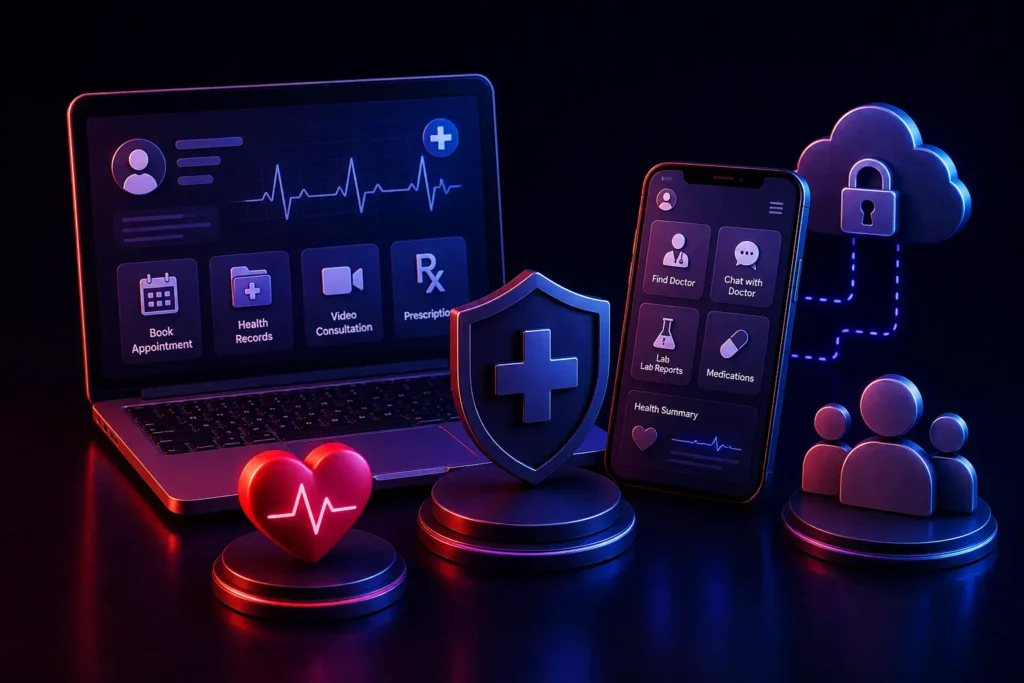
“Digital transformation in healthcare” gets talked about at the level of grand vision - AI diagnostics, predictive medicine, the future of care. The actual, immediate change most patients experience is far more mundane and, in our experience, far more impactful: whether they can book an appointment without a phone call, see their own lab results without waiting for a callback, and get a prescription refilled without a physical visit. That unglamorous layer is where real patient care is actually being improved right now.
Where patient-facing digital tools are actually moving outcomes, not just convenience
- Appointment scheduling and reminders, done well, measurably reduce no-show rates - a genuinely operational problem for clinics that a well-designed booking and reminder system directly addresses, freeing up appointment slots and improving continuity of care for patients who might otherwise fall out of a treatment schedule.
- Patient portals with real, timely access to their own data - lab results, visit summaries, medication lists - reduce the anxiety and delay of waiting for a callback, and give patients genuine ability to catch errors or ask informed follow-up questions rather than being a passive recipient of information relayed secondhand.
- Telemedicine for genuinely appropriate use cases - follow-ups, medication management, conditions that don’t require physical examination - removes real access barriers (travel time, cost, availability) that keep patients from seeking care they’d otherwise delay or skip entirely.
- Medication adherence tools - reminders, refill automation, simple tracking - address one of the most persistent, unglamorous problems in healthcare outcomes: patients not taking medication as prescribed, often not out of neglect but genuine forgetting or logistical friction that a well-designed tool directly reduces.
Where we push back on healthcare digital projects
A flashy patient-facing feature that doesn’t account for the real accessibility needs of the patient population it’s meant to serve - older patients, patients with limited digital literacy, patients on older or lower-spec devices - actively excludes exactly the population most likely to benefit from reduced friction in accessing care. We build healthcare tools with real accessibility and low-bandwidth performance as first-class requirements, not an afterthought, because the population most burdened by friction in the traditional system is often the same population least served by a poorly-built digital replacement.
What HIPAA compliance actually means for these tools, not just as a checkbox
Every one of these tools touches genuinely sensitive patient data, and the compliance discipline we’ve written about elsewhere - data minimization, proper encryption, real audit trails, explicit consent - applies fully here, regardless of how mundane the feature (an appointment reminder) might seem compared to a more dramatic AI diagnostic tool. The compliance bar doesn’t scale down just because the feature feels simple.
What we’d actually recommend prioritizing
Before more ambitious clinical AI features, get the unglamorous patient-facing basics genuinely right - accessible, reliable scheduling, timely data access, straightforward telemedicine for the visits that don’t need to be in-person. These are lower-risk, faster to build, and directly improve real patient experience and outcomes today.
We build these systems as part of our healthcare technology work, with accessibility and compliance built in from the start. Get in touch if you’re planning patient-facing digital tools and want to prioritize what will actually move outcomes.