
An audit, then the changes
Cloud Cost Optimization
Cloud bills grow through accumulation: environments nobody turned off, instances sized for a load test two years ago, storage tiers never reviewed. This engagement finds those, quantifies each one, and implements the changes you approve.
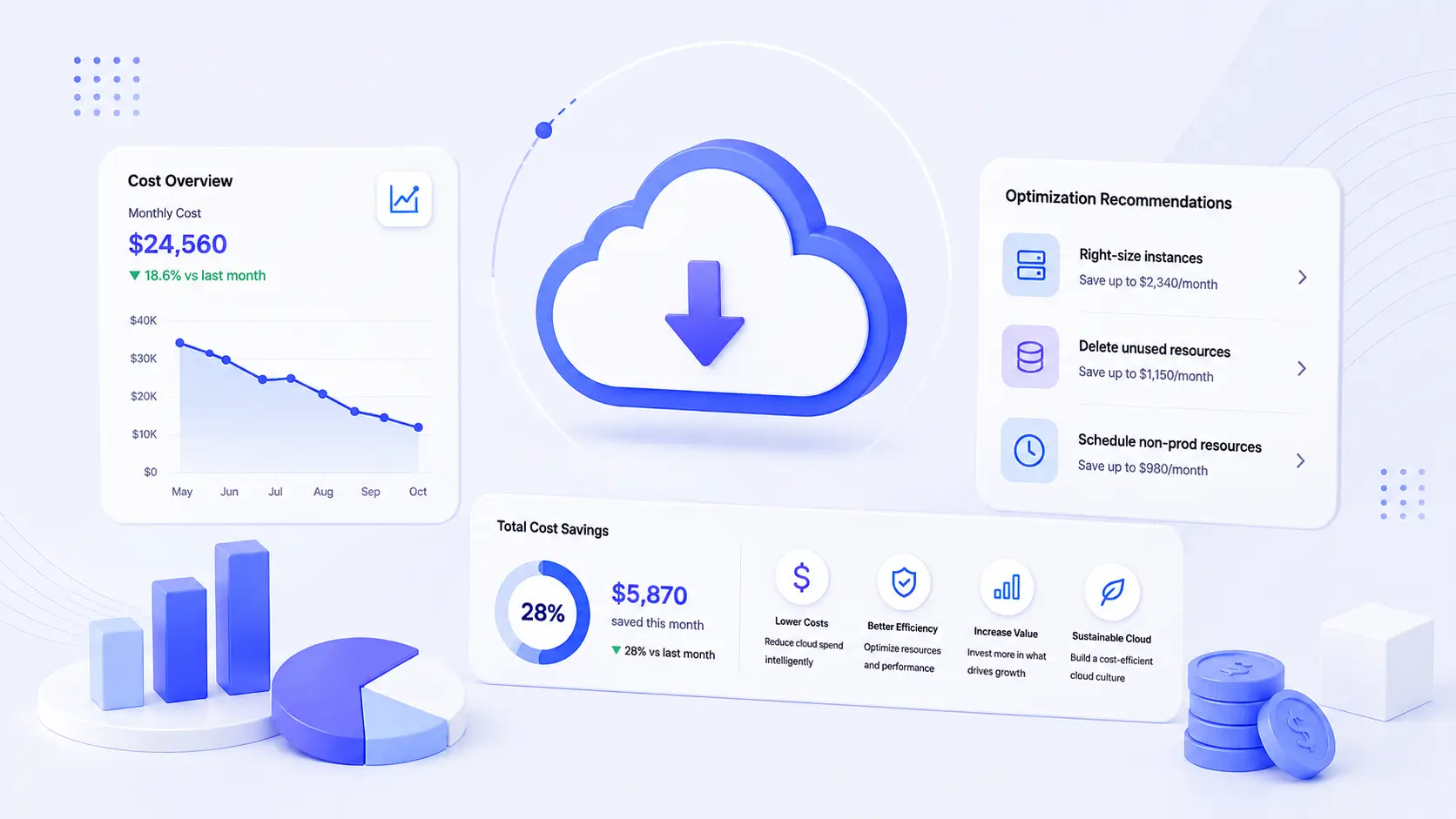
What Cloud Cost Optimization covers
Cloud bills rarely grow because of one bad decision. They grow by accumulation: environments spun up for a test and never turned off, instances sized for a load that no longer exists, storage tiers nobody has reviewed since the account was opened, and data transfer that surprises everyone.
Cloud cost optimization is mostly forensic, then boring. Find what is running, work out what it is for, quantify what each item costs per month, and switch off what nothing depends on. The savings are real and so is the risk, which is why nothing is turned off before we can say what would break.
We have no published case study here. What we will commit to is that the report names what it found and what it would save before you decide to act on any of it, so you are not paying for a recommendation you cannot evaluate.

Is this the right fit?
A fit when
- The cloud bill has grown and nobody can explain which part grew
- Environments were created for projects that have since ended
- Instances were sized during launch and never revisited
- You have never used reserved or committed pricing
- Finance is asking for a forecast nobody can currently produce
The wrong choice when
- Spend is small enough that the audit costs more than it saves, which we will tell you before starting
- The architecture is the problem, where re-platforming is the honest answer rather than trimming
- Nobody can approve infrastructure changes, because then the findings stay a document
- You are mid-migration, where it is worth waiting until the shape settles
What you get
A spend breakdown
What you are paying for, by service, environment and team. Most organisations have never seen this at the level the bill actually needs.
Waste identified and costed
Idle resources, orphaned volumes, oversized instances, forgotten environments and storage on the wrong tier. Each with a monthly number attached.
Right-sizing
Instances matched to real observed usage rather than to the guess made at launch, with headroom kept deliberately rather than accidentally.
Commitment planning
Reserved instances and savings plans modelled against your actual baseline, so you commit to what you genuinely run and not to a forecast.
The changes, implemented
Applied in order of saving against risk, one at a time, with the effect on the bill tracked. Nothing is changed without your approval.
Guardrails against drift
Budgets, alerts and tagging so the same accumulation does not simply happen again over the next two years.
How it runs
-
Access and baseline
Read-only access to billing and infrastructure, and a baseline of current spend. Read-only is deliberate: nothing can be changed during assessment.
-
The audit
A written findings list, each item with its monthly saving, the risk of changing it, and the effort. You can act on this yourself if you would rather.
-
Implementation
Approved changes made in order of saving against risk, lowest risk first, each one verified before the next.
-
Guardrails
Budgets, alerts and tagging policy, so somebody notices the next unreviewed environment within days rather than at the annual review.
Built with
The platform and the tools around it. Nothing here is chosen because it is new.
- AWS
- Azure
- GCP
- Terraform
- Kubernetes
- Docker
- CloudWatch
- Grafana
Questions we get asked
How much will we save?
We will not quote a percentage before looking, and anyone who does is guessing. The audit gives you a costed list, and you decide from there whether the work is worth doing.
Will this make the system less reliable?
That is the risk the whole approach is built around. Every change is costed against its risk, applied one at a time, lowest risk first, and verified. Reducing the bill by making the system fragile is not a saving.
Can we just buy the audit?
Yes, and plenty of teams do. The findings list is written so your own infrastructure people can act on it without us.
Do you need production access?
Read-only billing and infrastructure access for the assessment. Write access only for changes you have specifically approved, after the audit.
What stops the bill growing again?
Tagging, budgets and alerts, which are part of the engagement rather than an extra. Without them the same accumulation restarts the day we leave.
Tell us what you are building.
Send the problem and any constraints you already know about. You get a scope, an approach, and a real cost range - written by a person.