
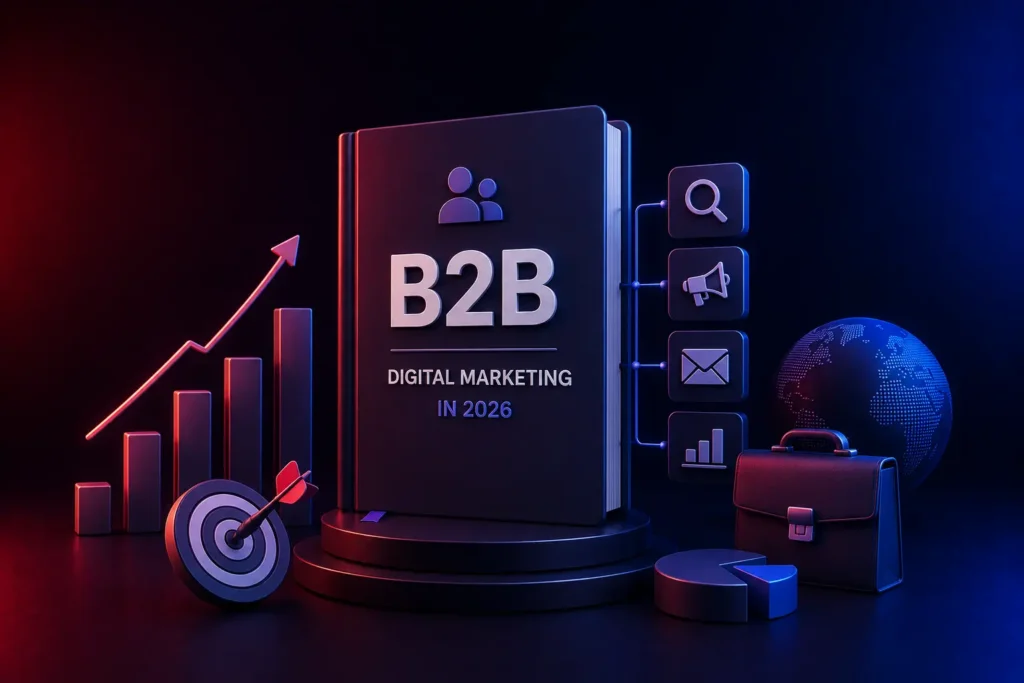
How is B2B digital marketing different from B2C?
B2B (Business-to-Business) digital marketing focuses on logic, long-term ROI, and building relationships with multiple corporate decision-makers over a long sales cycle (often 6-12 months). B2C (Business-to-Consumer) marketing focuses on emotion, quick impulse purchases, and selling directly to a single individual.
For B2B Marketing Directors, the market in 2026 is unforgiving. The tactics that worked five years ago-spamming thousands of generic LinkedIn InMails or running broad, untargeted Google Ads-now yield zero return on investment.
The biggest mistake enterprise marketers make is applying B2C tactics to B2B buyers. You cannot sell a $250,000 Custom Software Development contract using the same psychological triggers used to sell a $40 pair of sneakers on Instagram.
B2B buyers are highly educated, they are spending company money (not their own), and their jobs are on the line if they make a bad purchasing decision. To succeed, your B2B digital marketing strategy must be rooted in hyper-targeted authority. Here is the complete guide to generating high-value B2B leads in 2026.
1. Account-Based Marketing (ABM) is Mandatory
The era of casting a wide net is over. The cornerstone of modern b2b lead generation is Account-Based Marketing (ABM).
Instead of marketing to an entire demographic, ABM flips the funnel. You identify a specific, high-value target account (e.g., “We want to sell to Acme Corp”). You then treat that single company as its own unique market.
You deploy highly personalized ads directly to the IP addresses of Acme Corp’s headquarters. You write specific case studies demonstrating how your Cloud Architecture solves Acme’s specific industry problems. ABM requires intense alignment between marketing and sales, but the conversion rates on massive contracts are unparalleled.
2. High-Fidelity Content and Thought Leadership
B2B buyers do extensive research before they ever speak to a sales rep. If your website is a thin brochure with no technical depth, you will lose the contract before you even know you were in the running.
Your Content Marketing Strategy must focus on extreme quality. You must publish authoritative whitepapers, deep-dive technical webinars, and thorough case studies backed by data. If you are selling AI Integration, your content must prove to the Chief Technology Officer that you understand the nuances of smart technology better than they do. Thought leadership builds the trust required to close enterprise deals.
3. SEO for Long-Tail, High-Intent Keywords
Because the B2B sales cycle is long, your SEO strategy must capture buyers at every stage of their research journey.
Do not waste budget trying to rank for generic keywords like “Software.” You must dominate long-tail, high-intent keywords that signal a buyer is close to making a decision. For example, ranking #1 for “Cost of migrating legacy healthcare systems to AWS“ brings in vastly more qualified leads than generic tech terms. (We will cover this extensively in our upcoming guide on Zero-Click Searches).
4. The Power of LinkedIn (Done Right)
LinkedIn remains the undisputed champion of B2B social media, but automated connection requests are dead.
The algorithm currently heavily favors personal brand pages over corporate pages. B2B marketing teams must empower their Founders, CEOs, and lead engineers to post insightful, native content on their personal profiles. A deeply technical post about DevOps Engineering written by your Lead Architect will generate 10x more engagement and inbound leads than a polished graphic posted on the main company page.
5. Marketing Automation and Nurturing
A B2B prospect might download your whitepaper today but not be ready to buy for eight months. If you do not nurture that lead, your competitor will steal them in month seven.
You must utilize robust marketing automation tools connected to your CRM via custom API Development. Set up intelligent drip campaigns that send highly relevant, educational content to the prospect every few weeks based on their specific industry and past interactions with your website, keeping your brand top-of-mind until they are ready to sign a contract.
Conclusion
Successful B2B digital marketing is a game of patience, precision, and immense authority. By pivoting to Account-Based Marketing, dominating niche search intent, and producing undeniably high-quality thought leadership, you transition your marketing department from a cost center into the primary driver of enterprise revenue.
Is your B2B marketing failing to generate enterprise leads?
At VDPL, our digital marketing teams specialize in complex, high-ticket B2B lead generation strategies. Contact us today to rebuild your digital sales funnel.
Frequently Asked Questions (People Also Ask)
What is the best digital marketing channel for B2B?
For B2B marketing, the highest-converting channels are typically organic search (SEO focused on high-intent, technical keywords) and LinkedIn (specifically for networking, thought leadership, and hyper-targeted Account-Based Marketing ads).
What is Account-Based Marketing (ABM)?
Account-Based Marketing is a highly focused B2B strategy where marketing and sales teams collaborate to target best-fit, high-value accounts (specific companies) rather than casting a wide net to a general audience. The marketing is entirely personalized to the specific needs of the targeted company.
How long is a typical B2B sales cycle?
Unlike B2C where purchases are often immediate, a B2B sales cycle is highly complex and typically takes anywhere from 3 to 12 months. It requires building trust and getting approval from multiple corporate decision-makers (end-users, IT directors, procurement, and CFOs).