
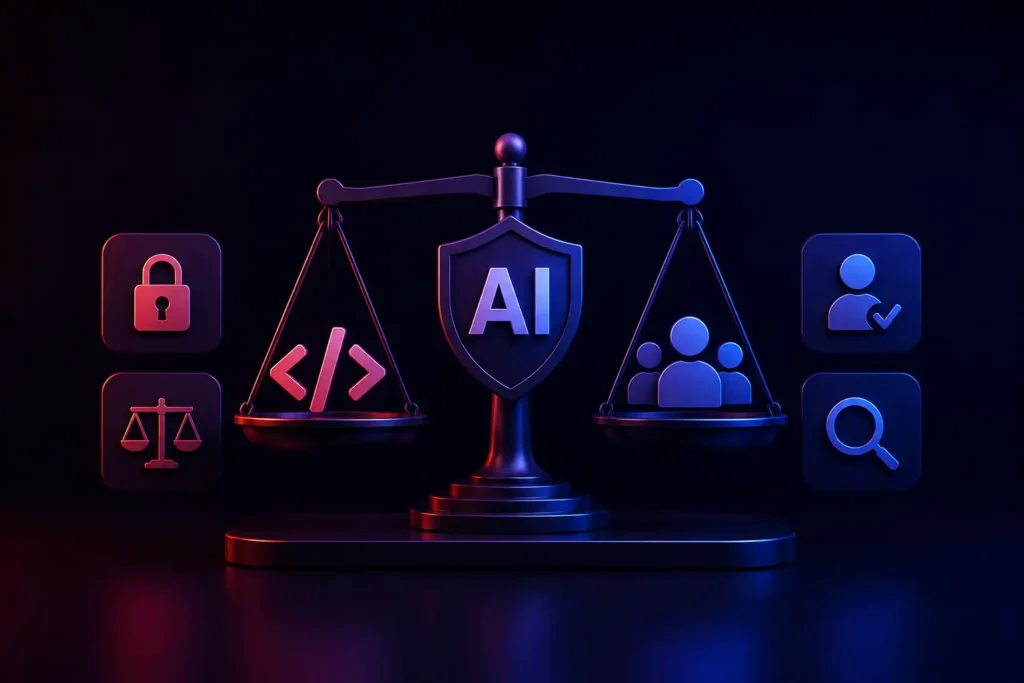
The Ethics of AI in Software Development: A C-Suite Guide
Why are AI ethics important in software development?
AI ethics are critical because AI algorithms make decisions that profoundly impact human lives. If an AI model is trained on biased data, it will automate and scale discrimination-such as unjustly denying loan applications or misdiagnosing patients. Ethical AI development ensures fairness, transparency, and legal compliance.
For C-Suite Executives and Tech Leaders, the race to integrate Artificial Intelligence into enterprise operations is moving at a breakneck pace. The promise of hyper-efficiency is intoxicating. However, when software systems evolve from simply executing rules to actually making autonomous decisions, a massive new layer of corporate risk is introduced.
In 2026, failing to address the ethics of AI is not just a PR vulnerability; it is a severe legal and financial liability. Governments globally are establishing strict regulatory frameworks governing data-driven decision-making.
If your Custom Web Development team is building AI-powered platforms-particularly in highly regulated sectors like the Healthcare Industry or Financial Services-you must establish a strict ethical framework before the software goes live.
1. The Threat of AI Bias in Software
AI algorithms are not inherently objective. They are trained on historical data sets curated by humans, and human history is inherently biased.
If a bank uses a smart technology algorithm to approve mortgages, and that algorithm is trained on forty years of historical housing data that contains redlining and systemic racial bias, the AI will learn that bias. It will silently and efficiently deny loans to minority applicants at a massive scale, believing it is simply following statistical logic.
The Solution:
Tech leaders must mandate strict data auditing. Before training a model, the DevOps Engineering and data science teams must aggressively sanitize the training data to remove prejudiced variables. The model’s outputs must be continuously monitored for disparate impact against protected classes.
2. The “Black Box” Problem and Transparency
Many deep learning intelligent systems operate as a “black box.” Data goes in, a decision comes out, but the mathematical path the AI took to reach that decision is so complex that not even the engineers who built it can easily explain it.
This lack of transparency is ethically unacceptable in important environments. If an AI diagnostic tool recommends a high-risk surgery, the doctor and the patient have a right to know why.
The Solution:
Enterprises must prioritize “Explainable AI” (XAI). If a customer’s credit limit is slashed by an automated system within your Mobile App, the architecture must be able to generate a clear, human-readable report detailing the exact variables that led to that decision, ensuring the user has a path to appeal.
3. Data Privacy and Surveillance Capitalism
AI models are voracious consumers of data. The more data they ingest, the smarter they become. Ethically, this creates a dangerous incentive for companies to harvest as much user data as possible, often without explicit consent.
The Solution:
Ethical AI development respects data enterprisety. When building an E-Commerce Platform that uses AI personalization, you must implement strict opt-in consent mechanisms. Utilizing techniques like “Federated Learning”-where the AI model learns from the user’s data locally on their device without ever sending the raw data back to the central corporate server-provides the benefits of AI without violating privacy.
4. Job Displacement and Human-in-the-Loop
The most common ethical concern regarding AI is the displacement of human workers. While we discussed how RPA can automate routine tasks to benefit employees, deploying AI solely to slash headcount aggressively damages corporate culture and brand trust.
The Solution:
The ethical gold standard is “Human-in-the-Loop” (HITL) architecture. AI should be deployed to augment human intelligence, not replace it entirely. The AI processes the massive data sets and provides a highly informed recommendation, but a human expert makes the final, critical decision, providing moral accountability.
Conclusion
The ethics of AI in software development cannot be an afterthought relegated to a compliance checklist right before launch. Ethical considerations must be baked into the foundational Cloud Architecture of the platform. By prioritizing transparency, eliminating bias, and respecting privacy, tech leaders can harness the immense power of AI while protecting their users and their brand integrity.
Looking to integrate AI responsibly into your enterprise?
At VDPL, we build powerful, transparent, and ethically sound AI architectures tailored to your business goals. Contact us today to discuss your technical roadmap.
Frequently Asked Questions (People Also Ask)
What is ethical AI?
Ethical AI refers to the development and deployment of artificial intelligence systems in a manner that is fair, transparent, accountable, and respects human rights and data privacy. It aims to prevent data-driven bias and ensure AI benefits society rather than causing harm.
What is AI bias?
AI bias (or data-driven bias) occurs when an AI system produces results that are systematically prejudiced against certain groups of people. This usually happens because the AI was trained on incomplete, skewed, or historically prejudiced data sets, which the AI then learns and perpetuates.
Why is explainable AI (XAI) important?
Explainable AI is important because it allows humans to understand how a smart technology model arrived at a specific decision. In critical areas like healthcare, finance, or criminal justice, relying on a “black box” AI that cannot explain its reasoning is dangerous and legally problematic.