
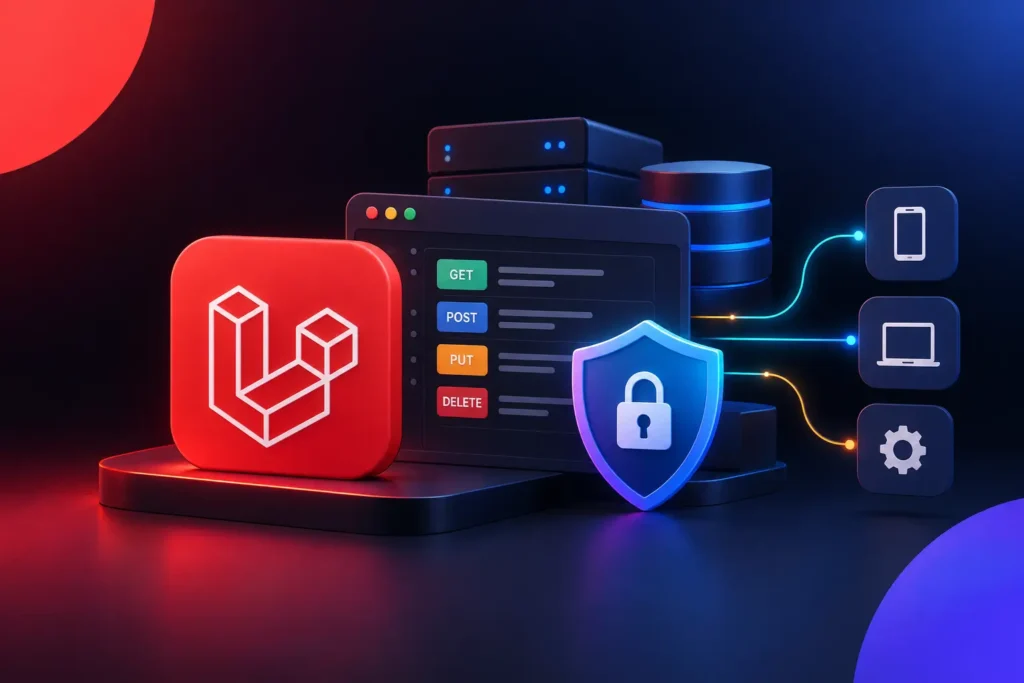
Building Secure APIs with Laravel in 2026
How do you secure an API in Laravel?
Laravel secures APIs through robust, first-party authentication packages like Laravel Sanctum (for lightweight SPAs and simple mobile apps) and Laravel Passport (for complex, full OAuth2 enterprise implementations), ensuring that every request is strictly authenticated and protected against modern web vulnerabilities.
For Backend Software Engineers, the modern web is no longer about monolithic applications returning HTML. It is about data distribution.
Whether you are building a React Single Page Application (SPA), a native iOS app, or feeding data into a Headless Shopify architecture, the core engine of your business is your Application Programming Interface (API).
APIs are the direct gateways to your enterprise database. If they are insecure, your company’s most valuable data is exposed. When building secure APIs in PHP, Laravel is unmatched because it provides battle-tested API scaffolding out of the box. Here is the technical breakdown of how to build and secure RESTful APIs using Laravel.
The Foundation: Resourceful Routing and Eloquent
Laravel makes building the structure of a RESTful API incredibly fast.
Instead of manually writing dozens of complex routes, Laravel’s API Resource Routing can instantly generate the standard CRUD (Create, Read, Update, Delete) endpoints for a specific model (e.g., Users or Invoices) with a single line of code.
API Responses must be clean JSON. Laravel’s API Resources act as a transformation layer. Instead of dumping raw database columns directly to the frontend, API Resources allow developers to precisely format the JSON payload, hiding sensitive database fields (like hidden IDs or timestamps) and eager-loading relationships to prevent the dreaded N+1 query performance problem.
Authentication: Sanctum vs. Passport
Securing the API is where Laravel truly shines. You must authenticate who is making the request. Laravel offers two distinct, first-party packages for this. Choosing the right one is critical for your Custom Software Architecture.
1. Laravel Sanctum (The Lightweight Solution)
Sanctum is the go-to choice for 80% of modern applications.
It is designed specifically to secure Single Page Applications (SPAs like React or Vue) and simple mobile applications.
- How it works for SPAs: Sanctum uses Laravel’s built-in cookie-based session authentication. It manages CSRF protection seamlessly, making it highly secure for frontend frameworks hosted on the same top-level domain as the API.
- How it works for Mobile: For mobile apps, Sanctum provides simple API token generation. The mobile app trades login credentials for a token, and attaches that token to the Header of every subsequent API request.
2. Laravel Passport (The Enterprise OAuth2 Server)
If you are building an enterprise platform that requires deep third-party integration (e.g., you want other businesses to build apps that connect to your API, similar to how apps connect to the GitHub or Slack API), Sanctum is insufficient.
You need Laravel Passport. Passport provides a full OAuth2 server implementation in minutes. It handles complex scopes, authorization codes, personal access tokens, and machine-to-machine client credentials, providing maximum security for massive, distributed enterprise architectures.
Advanced API Security Measures
Beyond authentication, Laravel provides native tools to harden the API against abuse:
- Rate Limiting: If an attacker tries to brute-force a login endpoint, or a poorly coded third-party script makes 10,000 requests a second, it will crash your server. Laravel’s Rate Limiting middleware allows you to easily declare rules (e.g.,
RateLimit::perMinute(60)->by($user->id)) to throttle abusive traffic instantly. - Form Requests & Validation: Never trust data coming from an API request. Laravel’s Form Requests allow developers to encapsulate complex validation logic (e.g., ensuring an email is unique, or a date is formatted correctly) before the data ever reaches the controller, ensuring malicious payloads are rejected immediately.
Conclusion
Building an API is easy; building a secure, scalable API is incredibly difficult. Laravel removes the immense risk of rolling your own security architecture. By leveraging Eloquent for clean data structuring, Sanctum or Passport for robust authentication, and built-in middleware for rate limiting, backend teams can deploy enterprise-grade APIs with absolute confidence.
Need to architect a complex, highly secure API for your enterprise?
At VDPL, our senior backend engineers specialize in building robust, scalable REST and GraphQL APIs using advanced Laravel architecture. Contact us today to discuss your technical infrastructure.
Frequently Asked Questions (People Also Ask)
What is the difference between Laravel Sanctum and Passport?
Laravel Sanctum is a lightweight authentication system designed for Single Page Applications (SPAs) and simple mobile apps using standard API tokens or cookie-based sessions. Laravel Passport is a heavy, robust OAuth2 server implementation designed for enterprise applications that need to allow third-party services or external developers to integrate with the API securely.
Is Laravel good for building APIs?
Yes, Laravel is arguably the best PHP framework for building APIs. It provides dedicated API routing, incredibly easy JSON response formatting via API Resources, robust validation tools, and highly secure, first-party authentication packages (Sanctum/Passport) right out of the box, drastically reducing development time.
What is API rate limiting?
Rate limiting is a security measure that restricts the number of API requests a single user or IP address can make within a specific timeframe (e.g., 60 requests per minute). It protects the server from being overwhelmed by Distributed Denial of Service (DDoS) attacks or poorly coded third-party apps, ensuring the API remains stable for all users.