
Essential Security Features Every Modern Website Needs in 2026
What are the most essential website security features?
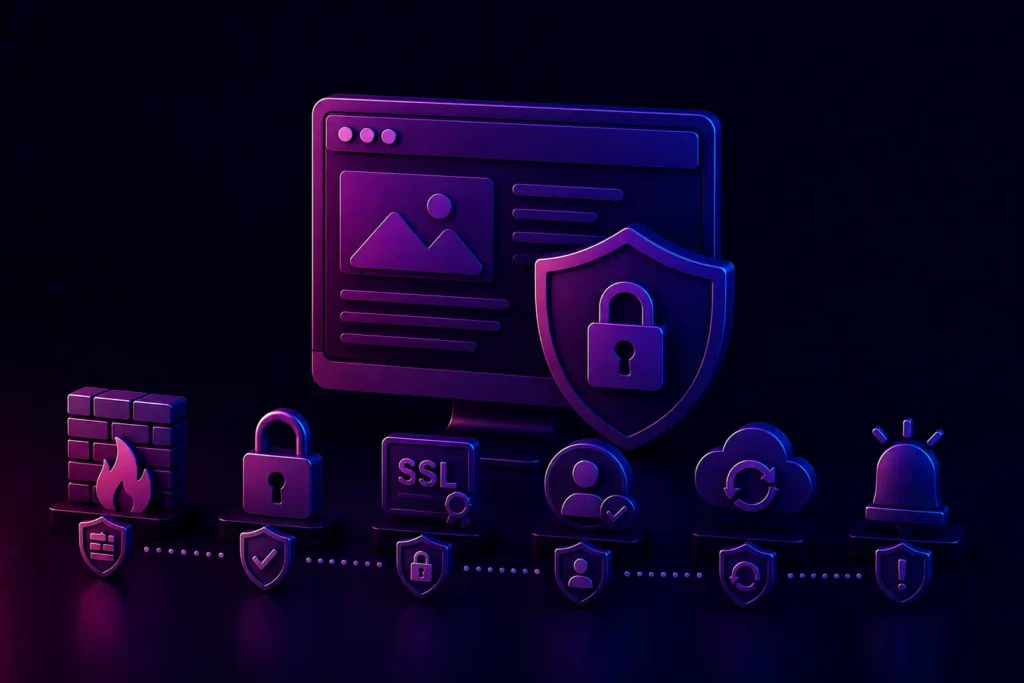
The most essential website security features in 2026 include an active Web Application Firewall (WAF), end-to-end SSL/TLS encryption, Zero Trust authentication frameworks, automated malware scanning, and secure API endpoints. Together, these features protect against data breaches, DDoS attacks, and unauthorized backend access.
In the digital economy of 2026, your website is often the most valuable asset your business owns. It houses your customer data, processes your financial transactions, and serves as the public face of your brand. Unfortunately, this makes it a highly lucrative target.
Cyber threats are no longer executed solely by lone hackers manually looking for vulnerabilities. Today, automated, AI-driven botnets constantly scour the internet, probing millions of websites simultaneously for outdated software, weak passwords, and unpatched plugins. For Business Owners, relying on a basic password and crossing your fingers is an unacceptable risk management strategy. A single data breach can result in devastating financial penalties, legal liabilities, and irreversible brand damage.
To safeguard your digital assets, secure web development must be a proactive priority, not a reactive afterthought. Here are the essential website security features every modern business platform must implement to prevent website hacks in 2026.
1. Web Application Firewall (WAF)
Think of a Web Application Firewall (WAF) as a high-tech security guard standing at the front door of your server. Before any traffic-whether it is a legitimate customer or a malicious bot-is allowed to interact with your website’s database, the WAF analyzes the request.
If the WAF detects suspicious behavior, such as SQL injection attempts (where hackers try to trick your database into revealing passwords) or Cross-Site Scripting (XSS), it immediately blocks the traffic. In 2026, the most effective WAFs are powered by smart technology, meaning they constantly update their threat definitions in real-time based on global attack patterns, stopping zero-day exploits before they can do damage.
2. End-to-End Encryption (SSL/TLS) and HSTS
Having a little padlock icon next to your URL in the browser is no longer a luxury; it is the absolute bare minimum. Secure Sockets Layer (SSL) and its modern successor, Transport Layer Security (TLS), encrypt the data traveling between your user’s browser and your web server. This ensures that if a hacker intercepts the data (such as a credit card number being submitted at checkout), they only see unreadable gibberish.
However, modern websites must take this a step further by implementing HTTP Strict Transport Security (HSTS). HSTS is a policy mechanism that forces web browsers to interact with your website only over secure HTTPS connections, strictly preventing downgrade attacks where hackers try to force the connection back to insecure HTTP.
3. Zero Trust Authentication and MFA
The traditional security perimeter model-where once a user logs in, they are trusted to move freely around the system-is dead. In 2026, the standard is Zero Trust Architecture. The philosophy is simple: never trust, always verify.
Even if an administrator inputs the correct password, a Zero Trust system will challenge the request based on context. Is the login coming from an unusual IP address? Is it happening at 3:00 AM?
At a minimum, implementing Multi-Factor Authentication (MFA) across all administrative accounts is non-negotiable. Using authenticator apps, biometric prompts (FaceID/TouchID), or physical security keys ensures that even if a hacker acquires an admin password via a phishing scam, they still cannot breach the backend of your Custom Web Development platform.
4. Secure API Architecture
As we discussed in our breakdown of The Future of Web Development, modern websites rely heavily on third-party APIs to connect with CRMs, payment gateways, and inventory systems. While APIs make websites incredibly powerful, they also create new doorways into your server.
Unsecured API endpoints are one of the leading causes of data breaches. Essential website security features must include:
- API Rate Limiting: Preventing hackers from spamming your API to crash your server (DDoS attacks) or brute-force passwords.
- Token-Based Authentication (OAuth 2.0 / JWT): Ensuring that only authorized applications can request data from your server, and those permissions automatically expire after a set time.
When Vikalp Development Pvt. Ltd. (VDPL) engineers architect API Integrations, we ensure every endpoint is encrypted and thoroughly tested against penetration attempts.
5. Automated Vulnerability Scanning and Backups
No system is 100% impenetrable. Therefore, resilience is just as important as defense.
Modern secure web development requires automated, daily vulnerability scanning. These tools constantly check your codebase, server operating system, and any third-party libraries for newly discovered security flaws, alerting your team before hackers can exploit them.
Equally important is an off-site, immutable backup strategy. If your website falls victim to a ransomware attack, a locally stored backup will likely be encrypted alongside your live site. Having automated, daily backups stored in an isolated Cloud Solution guarantees that, in the worst-case scenario, your business can restore the platform and resume operations with minimal downtime.
Conclusion
Hope is not a security strategy. In an era where cyber threats are heavily automated, business owners must ensure their digital infrastructure is equipped with modern, enterprise-ready defenses. From WAFs and Zero Trust authentication to strict encryption processs, these essential website security features form an impenetrable shield around your business and your customers’ data.
If you are relying on a generic template website or outdated hosting, you may be highly vulnerable to the threats of 2026.
Is your business’s digital infrastructure secure?
Secure Your Website today by scheduling a comprehensive cybersecurity audit with the technical experts at VDPL.
Frequently Asked Questions (People Also Ask)
How do I know if my website is secure?
A secure website will always load with ‘https://’ and display a padlock icon in the browser address bar. However, true backend security requires a technical audit to verify the presence of a Web Application Firewall, up-to-date software, secure database queries, and active malware scanning.
What is the most common cause of website hacks?
The most common cause of website hacks is outdated software and plugins, particularly on content management systems like WordPress. Hackers use automated bots to scan for known vulnerabilities in old software versions. Weak administrative passwords and lack of Multi-Factor Authentication (MFA) are also primary culprits.
Is an SSL certificate enough to secure my website?
No. An SSL certificate only encrypts the communication between the user’s browser and your server (protecting data in transit). It does absolutely nothing to stop a hacker from breaching your database via SQL injection or guessing your admin password. SSL is only one layer of a comprehensive security strategy.
What is a Web Application Firewall (WAF)?
A WAF is a security system that monitors, filters, and blocks malicious HTTP traffic traveling to and from a web application. It acts as a shield between your website and the internet, specifically designed to stop attacks like Cross-Site Scripting (XSS) and SQL injections.