
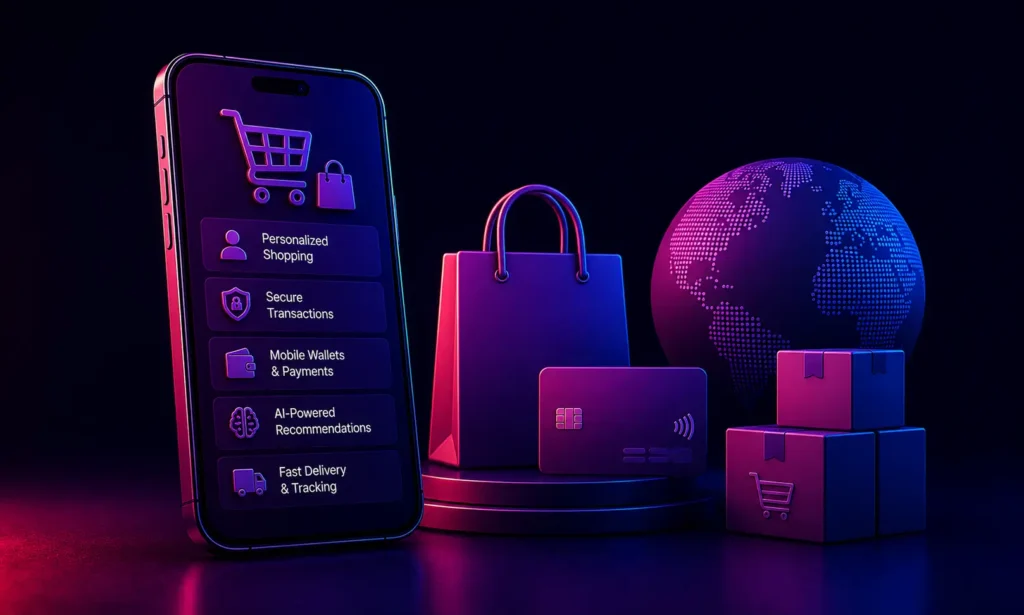
What is the future of mobile commerce?
The future of mobile commerce (mCommerce) in 2026 is defined by hyper-personalized, immersive experiences. Key trends include Augmented Reality (AR) try-ons that reduce return rates, AI-driven personal shoppers, smooth biometric checkouts (like FaceID integration), and social commerce where purchases occur entirely within video feeds without leaving the app.
For E-commerce Founders, the desktop computer is rapidly becoming obsolete as a primary sales channel. Mobile Commerce (mCommerce) no longer just means having a “mobile-responsive” website; it means architecting digital experiences specifically for the limitations and capabilities of a smartphone.
In 2026, mobile devices account for the vast majority of global digital retail traffic. Consumers are making purchasing decisions while commuting, watching television, or waiting in line. Because their attention is fragmented, the brands that win are the ones that remove every conceivable point of friction from the shopping journey.
If you want to dominate your retail niche, understanding the future of mCommerce and adapting to these emerging mobile shopping trends is absolutely essential. Let’s explore the technologies reshaping mobile retail in 2026.
1. Augmented Reality (AR): The End of Guesswork
The biggest hurdle in digital retail has always been the inability to physically interact with a product. “Will this couch fit in my living room?” “Will these sunglasses look good on my face?” This uncertainty leads to cart abandonment and incredibly high, costly return rates.
Augmented reality in retail solves this. By leveraging native device hardware-such as LiDAR scanners on modern smartphones-retailers can project photorealistic 3D models of their products directly into the user’s physical environment.
In 2026, AR is no longer a gimmick. If a user is shopping for cosmetics on your custom mobile app, they expect to use their front-facing camera to “try on” a lipstick shade in real-time. If you are selling furniture, they expect to project a true-to-scale digital couch into their living room. Brands implementing robust AR are seeing a dramatic decrease in return rates and a massive surge in conversion confidence.
2. Zero-Friction Biometric Checkouts
As we highlighted in our Web Performance Guide, every second a user spends in the checkout funnel increases the likelihood they will abandon the purchase. Forcing a mobile user to manually type in a 16-digit credit card number and a billing address using a tiny digital keyboard is a conversion killer.
The future of mCommerce is the true “one-click” checkout, powered by device biometrics. By integrating smoothly with Apple Pay, Google Pay, and decentralized digital wallets (a core feature of Web 3.0 Integration), users can authenticate a purchase simply by looking at their phone (FaceID) or tapping their fingerprint.
3. Social Commerce and Livestream Shopping
Social media platforms are no longer just marketing funnels that redirect traffic to your website; they have become the storefront itself.
Consumers in 2026 do not want to see a product on TikTok or Instagram, open a new browser tab, search for your brand, find the product, and checkout. They expect to click the item inside the video and purchase it immediately without ever leaving the social media app.
E-commerce founders must ensure their backend inventory systems are deeply connected via robust API architectures to these social networks. Livestream shopping-where influencers demonstrate products live while viewers click to buy in real-time-has transitioned from an Asian market trend to a dominant global sales strategy.
4. AI-Powered Personal Shoppers
Searching for products using text-based search bars is becoming antiquated. The integration of generative AI into mCommerce has birthed the era of the digital personal shopper.
Instead of navigating through endless categorized menus (e.g., Men > Clothing > Outerwear > Winter), users can simply speak or type complex, conversational queries into your app: “I need a waterproof jacket for a hiking trip in Seattle next week, under $150.”
The AI instantly analyzes the inventory, checks the weather in Seattle, and presents a highly curated list of exact matches. This level of hyper-personalization, driven by deep AI Integration, drastically reduces search friction and builds immense brand loyalty, acting as a powerful mobile app retention strategy.
Conclusion
The future of mCommerce is immersive, instantaneous, and highly personalized. Consumers expect retail apps to utilize the full hardware capabilities of their smartphones to make shopping an engaging, frictionless experience. E-commerce founders relying on standard, templated mobile websites are already falling behind.
To capture market share in 2026, you must architect your digital storefront to support AR, biometric payments, and AI-driven curation.
Is your e-commerce platform ready for the mobile-first future?
Partner with VDPL to engineer a custom E-Commerce Platform that utilizes the latest mCommerce technologies to maximize your conversion rates.
Frequently Asked Questions (People Also Ask)
What is the difference between eCommerce and mCommerce?
eCommerce refers to the buying and selling of goods over the internet using any device, traditionally desktops or laptops. mCommerce (Mobile Commerce) is a subcategory of eCommerce that specifically refers to transactions conducted on a mobile device, such as a smartphone or tablet, often via a dedicated mobile app.
How is Augmented Reality used in retail?
Augmented Reality (AR) in retail is used to overlay digital products into the real world via a smartphone camera. Consumers use it to virtually “try on” clothing, glasses, or makeup, and to visualize how large furniture or appliances will look and fit inside their actual homes before making a purchase.
Why is mobile commerce growing so fast?
mCommerce is growing rapidly due to the near-universal adoption of smartphones, the convenience of shopping anywhere at any time, the rise of frictionless payment methods like Apple Pay, and the integration of native shopping features directly into popular social media platforms.